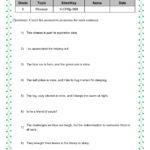
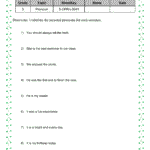
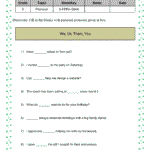
Pronoun worksheets for grade 5 help students in the fifth grade learn about different types of pronouns and their applications. Each worksheet listed below contains 5 individual worksheets with unique questions. These English worksheets are available below. The answers to all worksheets are also available to download as a separate file on the bottom of the page.
A pronoun is a word that takes the place of a noun in a sentence. It helps avoid repeating the same nouns again and again. Words like he, she, it, they, we, you, and I are pronouns. For example, instead of saying “Ravi is a boy. Ravi likes to play,” we can say, “Ravi is a boy. He likes to play.” Pronouns make sentences shorter, simpler, and easier to understand.
Tags : Instant download, PDF worksheets, Grade-5 worksheets, English worksheets, Grade-5 English worksheets, Class 5 English
📚 Upgrade to the Grade 5 English Workbook Series
Avoid printing loose sheets individually. Choose a structured approach tailored to your child's exact academic goals:
Comprehensive Workbooks: Covers the entire syllabus sequentially with 2 worksheets per topic. Ideal for full-term revision.
Chapter-Wise Workbooks: Deep-dives covering specific chapters with ~5 worksheets per sub-topic for concept mastery.
Workbook Bundles: Get the complete collection of all chapter workbooks grouped together in 1-click for maximum value.
A possessive pronoun shows who owns something. It tells us that something belongs to someone. Words like mine, yours, his, hers, ours, and theirs are possessive pronouns. For example, “This ball is mine,” means the ball belongs to me. “That is his book,” means the book belongs to him. Possessive pronouns help us write better sentences without saying the name again and again. Solve different types of questions about possessive pronouns.
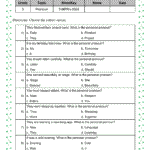
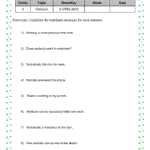
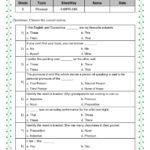
A personal pronoun is a word that replaces a specific person or thing in a sentence. It shows the person speaking, the person spoken to, or the person or thing spoken about. Personal pronouns include I, we, you, he, she, it, and they. For example, in the sentence "Rita is kind. She helps everyone," the word "she" is a personal pronoun that replaces "Rita." These pronouns make sentences shorter and clearer. Solve different types of questions about personal pronouns.
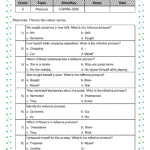
A reflexive pronoun is used when the subject and the object of a sentence are the same person or thing. It reflects back to the subject. Reflexive pronouns end in -self or -selves, like myself, yourself, himself, herself, itself, ourselves, yourselves, and themselves. For example, in the sentence "She made it herself," the word "herself" is a reflexive pronoun. These pronouns add emphasis or show that the action is done by the subject alone. Solve different types of questions about reflexive pronouns.
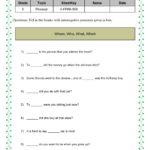
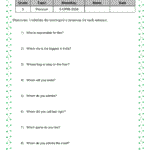
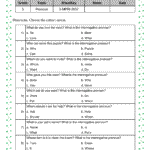
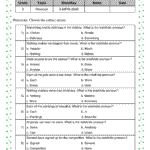
An interrogative pronoun is a pronoun used to ask questions. It stands in place of the noun we are asking about. Common interrogative pronouns are who, whom, whose, which, and what. For example, in the question “Who is your teacher?”, the word “who” is an interrogative pronoun. These pronouns help us ask about people or things without naming them directly. They are always used in questions. Solve different types of questions about interrogative pronouns.
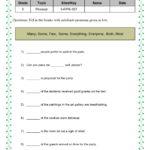
An indefinite pronoun is a word that refers to a person or thing in a general way, without saying exactly who or what. It does not name a specific person or thing. Some common indefinite pronouns are someone, anyone, everyone, nobody, something, and everything. For example, in the sentence “Someone is at the door,” the word “someone” is an indefinite pronoun. These pronouns are useful when we don’t know or need to say exactly who or what. Solve different types of questions about indefinite pronouns.
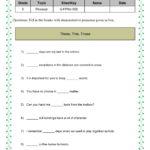
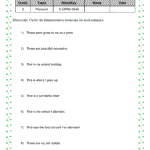
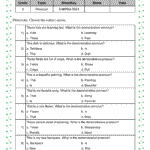
Demonstrative pronouns are used to point at people or things. The words this, that, these, and those are demonstrative pronouns. We use this and these for things that are near. We use that and those for things that are far. For example, “This is my pen” and “Those are my pencils.” Demonstrative pronouns help us show what we are talking about clearly in a sentence.Solve different types of questions about demonstrative pronouns.